Safflower flower extract in Penetrex Balm
The orange flower heads of safflower, a plant grown for its oil and its colour, contribute a botanical extract to the formula.


Safflower is the bright orange flower on the ingredient picture, and one of the more unusual names on the Penetrex Balm list. Its flower extract is the botanical heart of the formula, an ingredient with a long history in traditional herbal practice in Asia.
| Plant | Safflower, Carthamus tinctorius |
|---|---|
| Part used | Flower, as an extract |
| Known for | Seed oil, natural orange dye, traditional herbal use |
| Role in the balm | Botanical extract |
| Name on the label | Carthamus tinctorius (safflower) flower extract |
What safflower is
Carthamus tinctorius, safflower, is a thistle-like plant with spiky leaves and round flower heads that open in shades of yellow, orange and red. It is grown on several continents, mostly for the oil pressed from its seeds, which is used in cooking and in cosmetics, and for the pigment of its petals, which has been used as a natural dye and food colouring for centuries.
The photograph on this page shows exactly that: orange flower heads, a wooden bowl of seeds and a small bottle of golden oil, the three things safflower is known for. In Penetrex Balm it is the flower that is used, in the form of an extract.
Safflower in traditional herbal practice
The dried flowers of safflower are known in traditional Chinese herbal practice under the name hong hua, "red flower", and have been part of herbal formulas in East Asia for a very long time. That tradition is the reason safflower flower extract shows up in balms and rubs that are composed around a blend of plants.
That history is why safflower flower extract is such a natural fit for a balm composed around a blend of plants: it brings a recognisable botanical name and a story that is easy to look up.

The role of the extract in the formula
In Penetrex Balm the safflower flower extract belongs to the plant group with eucalyptus, lavender and Ligusticum chuanxiong, while menthol and methyl salicylate carry the cooling and warming sensations. The base of the balm is water, palm glycerides and the emulsifier cetearyl glucoside.
Safflower is the ingredient that gives the formula its botanical character. If you like to know what is on the label of the things you rub into your skin, it is a good example of an ingredient that is easy to look up and easy to picture.
Practical notes
People who are allergic to plants of the daisy family, which includes safflower, should be cautious with any product that contains daisy-family extracts and should read the pack carefully. A small test on a small patch of skin is a sensible habit with every new balm.
Apply Penetrex Balm in a thin layer to clean, dry skin over the area of discomfort, wash your hands afterwards and stop using it if your skin reacts.
Where is safflower flower extract on the Penetrex Balm label?
The carton prints it as Carthamus tinctorius (safflower) flower extract, one of 29 names in the key-ingredient list. It belongs to the group plants and plant oils, together with eucalyptus globulus leaf oil, ligusticum chuanxiong oil, lavandula angustifolia (lavender) oil. Amounts are not published for any ingredient. See the complete ingredient list and the safety notes.
Questions about safflower flower extract
Is safflower the same as saffron?
No. Safflower is a thistle-like plant with orange flower heads; saffron comes from the stigmas of a crocus flower. The two are sometimes confused because both give a golden colour.
Which part of safflower is used in Penetrex Balm?
The ingredient list names Carthamus tinctorius (safflower) flower extract, so it is the flower.
Does the balm colour the skin?
Penetrex Balm is applied in a thin layer and is meant to be pressed into the skin over the area of discomfort.
Who should be careful with safflower?
People allergic to daisy-family plants should read the pack carefully and test a small patch first.
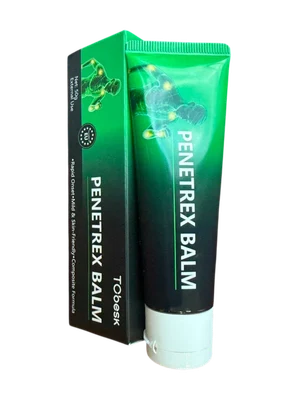
KES 5,990 for the 50 g tube. An operator confirms your order by phone and you pay on delivery.